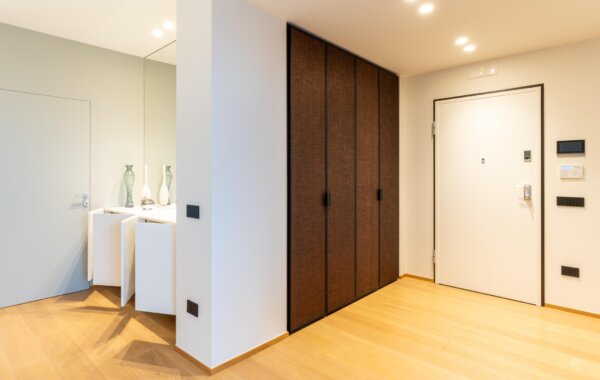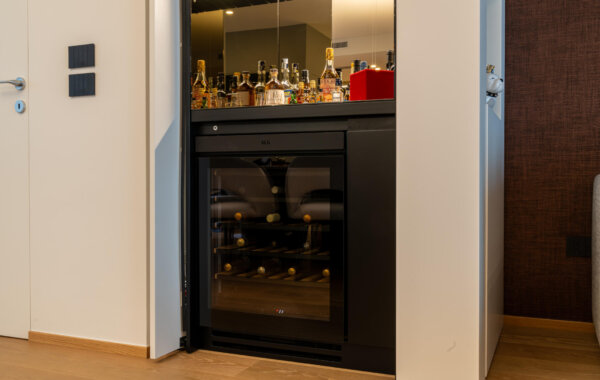



The two terms are used synonymously, but they indicate two different professions. Knowing what distinguishes carpentry from’cabinetmaking It helps you understand what to expect from the person who will make your furniture, and why the quotes from two workshops can be so different.
Two professions, one subject
Both work with wood, both use machines and hands. The difference isn't the material but the degree of finish and the type of problem they're equipped to solve. A carpenter builds; a cabinetmaker builds and finishes down to the last visible millimeter.
What does the carpenter do?
Carpentry is the basic craft: wooden structures, fixtures, doors, stairs, roofs, and linear solid wood furniture. It's solid, often structural work, where durability matters more than appearance. Many carpenters produce excellent furniture, but their repertoire stops where the decorative work begins.
What does the cabinetmaker do?
The cabinetmaker's craft begins as a specialist in fine woods—ebony, to be precise—and surfaces. He or she specializes in veneers, inlays, curved shapes, flush-fitting doors, invisible joints, and layered varnishes. It's a craft of detail, where the value lies in what the eye cannot fully grasp.
The difference lies in the workmanship
Everyone can make a flat door. A curved door that follows a rounded wall, with the wood grain continuing seamlessly from one panel to the next, requires equipment, experience, and time. It's there that the distinction between the two crafts becomes apparent.
Solid wood and veneer
There's a widespread misconception: solid wood equals high-quality, veneer equals cheap. In practice, it's more complex. Solid wood moves with moisture and doesn't allow for certain shapes; quality veneer allows for large, stable surfaces with individually selected grain patterns. Every essence has its correct use.
Project or execution
Another distinction is made upstream. Those who simply execute receive a drawing and make it. A cabinet-making workshop, on the other hand, enters the design phase: it surveys, proposes solutions, corrects impossible dimensions, and discusses with the architect. The project and the assembly they are part of the same job.
When you really need a cabinetmaker
For a linear kitchen in a standard apartment, a good carpenter is enough. A cabinetmaker is needed when there are off-square walls, uneven ceilings, curves, or matching fine woods, or when the cabinetry needs to blend into the architecture rather than sit atop it.
Why we call ourselves cabinet-making
For three generations, we've done everything in-house in our Bari workshop: cutting, assembly, hand-finishing in our booth, and installation by our own skilled craftsmen. We call ourselves cabinetmakers because it's the word that honestly describes the type of work we do, not because it sounds better.
🌿 Do you want to see our completed projects?
Discover our custom furniture portfolio or Contact us for a free inspection in our showroom in Bari.