

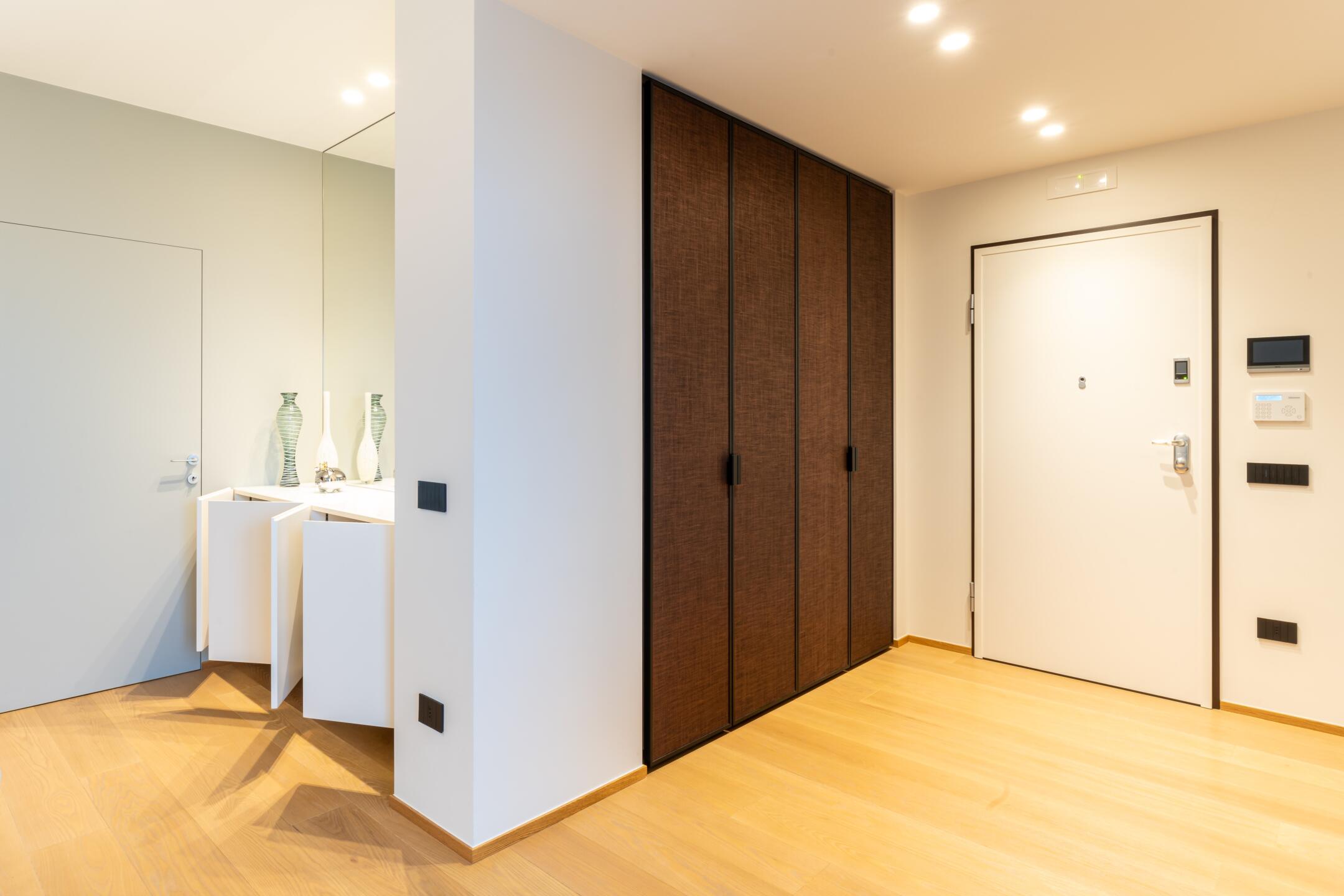

A flush door It doesn't protrude, has no frame, and aligns perfectly with the wall. When closed, it looks like a barely perceptible rectangle; painted the same color as the wall, it almost disappears. It's one of the choices that most changes the perception of a home.
How it's made
The difference lies in the frame: a metal subframe is embedded in the masonry and plastered flush, leaving no exposed frame. The door rests on concealed hinges and closes on the frame without an external rebate.
Why you choose
For continuity. In a hallway with three or four doors, eliminating the frames removes as many visual interruptions, making the room appear tidier and more spacious. This is why it works particularly well in smaller apartments.
Painted or coated
Two approaches. The door, painted like the wall, aims for total disappearance. The wood-paneled one, on the other hand, becomes a decidedly panel: it's visible, but it's interpreted as paneling, not as a door. Both solutions they have their context.
The right time to decide it
It should be decided before plastering. The subframe is installed on the rough masonry, and anyone who arrives later will find the job much more complex and expensive. This is the most common mistake: thinking about it after the walls are already finished.
Internal or external opening
Flush-to-the-wall windows come in both versions. The internal flush version maintains the flush-to-the-wall aspect on the room side; the external flush version maintains the flush-to-the-wall aspect on the corridor side. If you want the effect on both sides, a specific system is required, and this should be communicated to the designer beforehand.
Handle or no handle
Consistency dictates a minimal handle or recessed grip. On service doors, you can eliminate the handle entirely and use a push-open mechanism, but only where traffic isn't frequent: on a door used frequently, this becomes inconvenient.
Flush-fitting and paneling
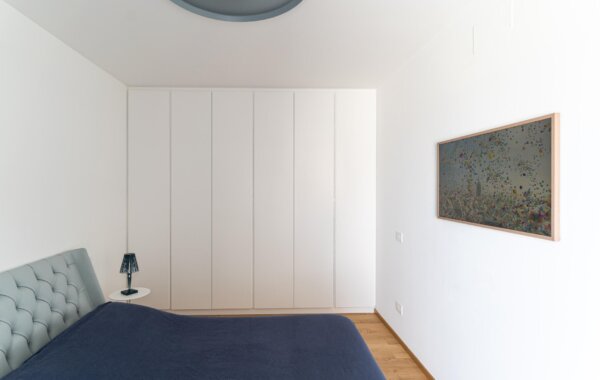
The best result is achieved when the door is part of a larger wall covering. The wall is designed as a whole, and the door fits where the rhythm of the panels allows. The boiserie absorbs the passage instead of suffering it.
A detail that is noticeable by its absence
No one walks into a house and comments on flush doors. Instead, they notice that the rooms seem cleaner, without being able to explain why. That's exactly the effect they're chosen for: not to add anything, but to remove what was bothering them.
🌿 Do you want to see our completed projects?
Discover our custom furniture portfolio or Contact us for a free inspection in our showroom in Bari.