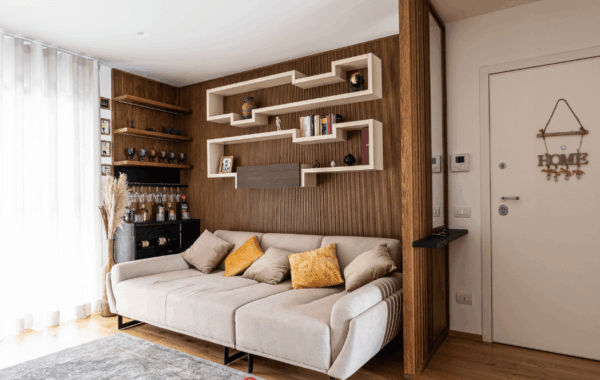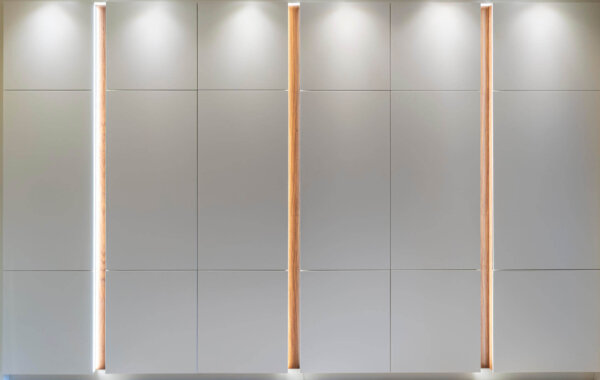



Ogni casa oggi ha più dispositivi da alimentare che prese disponibili. In un arredo su misura il problema si risolve a monte: le prese si integrano nel mobile, e i cavi corrono dentro invece che lungo il muro.
Il problema dei cavi a vista
Non è solo estetica. Un cavo che scende da un piano di lavoro si impiglia, si sporca e limita l’uso della superficie. Nelle pareti attrezzate, poi, il groviglio dietro il televisore è la prima cosa che si vede quando si sposta il mobile.
Prese a scomparsa nel piano
Si aprono con una pressione, restano complanari al piano quando sono chiuse e spariscono del tutto a lavoro finito. Sull’isola della cucina o su una scrivania sono la soluzione più pulita, perché non richiedono di forare la parete più vicina.
Passacavi nelle ante e nei fianchi
Un foro passacavo ben posizionato permette di alimentare un apparecchio tenendolo dentro il mobile. Allineato alle maniglie e finito nella stessa tonalità, diventa parte del disegno invece di sembrare una lavorazione fatta dopo.
Dove prevederle in cucina
Le posizioni utili sono tre: sull’isola per i piccoli elettrodomestici, in una colonna dedicata per quelli che restano sempre collegati, e in un cassetto attrezzato per la ricarica di telefoni e tablet lontano dai piani di lavoro. Nelle cucine compatte il cassetto di ricarica libera moltissimo piano.
Nel living e dietro il televisore
Il vano tecnico dietro la zona televisore va previsto in fase di disegno: profondità sufficiente per gli apparecchi, aerazione, fondo apribile per la manutenzione. In una parete attrezzata è la parte che decide se il risultato sarà ordinato o meno.
La scrivania e lo studio in casa
Con il lavoro da casa la postazione ha bisogno di più alimentazione di una cucina. Una canalina sotto il piano, una presa a scomparsa e un passacavo posteriore bastano a mantenere la superficie libera. Nelle scrivanie su misura lo prevediamo sempre.
Ricarica senza cavo nel piano
È una richiesta in crescita: un’area del piano che ricarica il telefono per appoggio, senza nulla in vista. Va decisa prima della lavorazione del piano, perché richiede una fresatura sul retro e un’alimentazione dedicata.
Decidere prima, non dopo
Tutte queste soluzioni costano poco se entrano nel progetto e molto se si aggiungono a mobile finito. È il motivo per cui, durante il rilievo, chiediamo sempre dove verranno usati gli apparecchi: la risposta cambia il disegno.
🌿 Vuoi vedere i nostri progetti realizzati?
Scopri il nostro portfolio di arredi su misura oppure contattaci per un sopralluogo gratuito nel nostro showroom di Bari.